

Building Border Resilience in an Era of Geopolitical Instability
Situational awareness has become central to this process. Border authorities increasingly rely on systems that monitor travel patterns, flag potential risks before travellers reach the control desk, and provide officers with the information they need to make timely decisions. When these systems function well, higher risk cases can be identified earlier, allowing officers to focus attention where it matters most.
This approach helps maintain controlled throughput even during periods of disruption. Passengers continue to move through the system efficiently, while security checks remain targeted and proportionate.
Collaboration also plays a significant role in maintaining operational stability. Airlines, regional partners, intelligence agencies, and domestic law enforcement all contribute pieces of information that shape the border picture. When those insights are shared rapidly and integrated into operational systems, authorities gain a clearer understanding of emerging risks before they reach the border itself.
The practical benefit is straightforward. When emerging threats are visible earlier, authorities can adjust resources, strengthen screening where necessary, and manage passenger flows more effectively before disruption spreads across the border environment.
AI is now becoming very valuable in assisting control of border lanes, managing pedestrian and vehicular traffic queues to maximise efficiency and reduce delays, automatically detect left articles in xray scanner trays, over height baggage and dangers such as hands on conveyor belts.
A wholistic approach of fast throughput, lane optimization, and safe but fast use of scanners to provide real time actional intelligence to the relevant departments and personnel to react fast and proportionately.
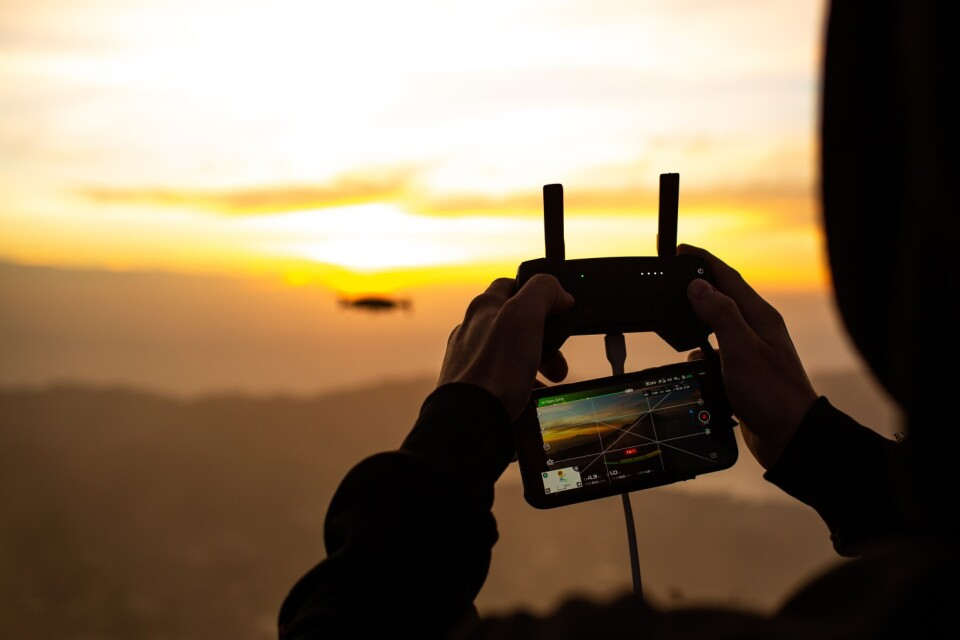
The border is not limited to the checkpoints, it also consists of the physical barriers, be they sea, river or fence and these must also be protected and monitored in real time, allowing for early detection and classification of threats from persons, vehicles and even drones. This can be effected by utilization of fence intrusion/climbing, ground sensors, radar looking across borders (and above to detect drones and aerial threats) , combined with optical and thermal cameras and even drones for threat verification and real time monitoring/tracking of threats.
On a border of any length, these sensors can number in their thousands, making it a very complicate picture for human operators to monitor and have full real time situational awareness of. Therefore control rooms and control solutions must be capable of monitoring the health status of the sensors and their activations and data sent, in real time to link and integrate sensors to give multi-factor intelligence such as, a sensor/radar detecting an object/event that might be a threat being linked to the correct and linked video feed from a camera/cameras and the launch of a drone to track and send live images of moving threats if it meets the threat response criteria.
AI and data-mining capabilities should be capable of monitoring and searching for individual or groups of persons/vehicles that are regularly passing or detected by sensors and compared to the known normal activities and events expected and learned from previous activities.
The required ability of the control solution for any border is to handle the myriad of normal activities, events, detections and daily happenings in real time, and to automatically and clearly show exceptions or possible threats to the relevant personnel monitoring and offer a preprogrammed and agreed operational procedure to react and counter them.
Ultimately, resilience comes down to how border security systems are designed. Some organisations still build their processes around stable conditions and treat crises as exceptional events. Others are beginning to recognise that instability is becoming a constant feature of the operating landscape.